Introduction: The age-old dilemma
When investors begin their property journey, they’re faced with a crucial decision:
Should I prioritise income, or is capital growth more important?
It’s one of the first questions investors ask — but it’s also one of the most misleading.
Why?
Because income and growth are not opposites, and they’re not mutually exclusive.
This article explains why most investors struggle with this question and how to approach it with a strategy-first mindset.
The goal isn’t to choose one over the other. It’s to understand how they work together within a balanced portfolio.
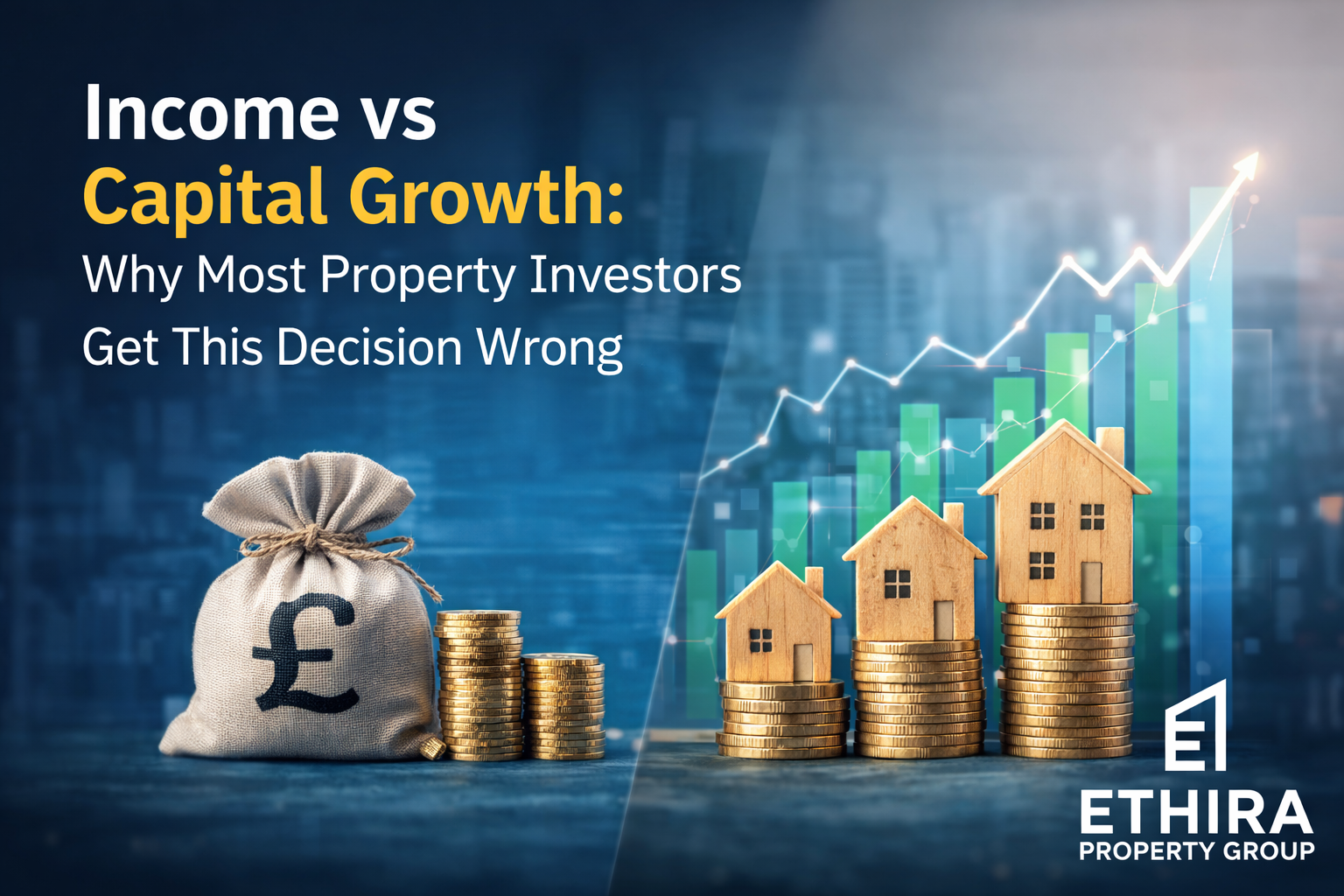
The classic income vs growth debate
The income vs growth debate is often framed as a binary choice:
-
Income: Focus on cashflow, with properties that generate high rental yields.
-
Growth: Focus on appreciation, buying in areas that will increase in value over time.
It sounds simple. But in reality, it’s a false choice. Income and growth are complementary, not opposing forces.
Here’s why:
- High-growth properties may not provide immediate returns, but they build equity over time.
- High-income properties offer regular cash flow, but they don’t necessarily appreciate in value as much.
So, what should investors really be focusing on?
Why focusing solely on income is a mistake
High-yield properties often attract new investors because they promise a quick return. Who doesn’t want a property that delivers a decent rental income right from the start?
But here’s the thing:
Focusing too much on yield often leads investors to sacrificial decisions:
- Location: Often in lower-demand areas, where properties offer higher rents but are less likely to appreciate.
- Property type: Choosing properties that aren’t necessarily the best fit for long-term wealth-building, such as houses in areas with high vacancy rates or poor future potential.
While these properties might bring in cash, they don’t compound value in the same way a growth-focused asset might.
The case for growth (and why it’s not about chasing "the next big thing")
Many seasoned investors will tell you that growth is where the real wealth-building happens. However, growth doesn’t always come in the form of the next “hot location” or speculative investment.
True growth is about strategic investments in areas with strong long-term fundamentals:
- Regeneration zones
- Transport links
- Economic development
- High-demand rental markets
While growth can initially feel slower, it compounds over time. As your property value increases, so does your ability to recycle equity into new investments — creating a snowball effect for your portfolio.
Why both income and growth are essential — and how to balance them
The trick is finding a balance between income and growth.
Here’s how strategic investors think about it:
1. Start with growth
In the early stages of your portfolio, growth is usually the priority. You’re building equity, and this will be the foundation for future wealth.
The goal is to acquire properties in areas that are poised for growth — where you’re likely to see appreciation over time.
2. Transition to income
Once you’ve built some equity, it’s time to bring in more stable, predictable income.
Here’s where you can shift toward properties that generate consistent cashflow, particularly if your strategy has shifted from wealth-building to sustainable portfolio expansion.
You may look for properties with solid rental yields but in well-established areas, where appreciation is slower, but rental income is more stable.
3. Assess regularly
Your strategy should evolve over time, depending on your goals, timing, and current market conditions. As you approach financial independence, you may prioritise higher income to generate reliable cashflow, or you may continue to focus on long-term growth.
The balance will always depend on where you are in your journey.
How Ethira Property Group helps investors make this decision
At Ethira, we take a strategy-first approach to property investment.
Rather than starting with property types or locations, we begin by understanding:
- What are your financial goals?
- How much risk can you tolerate?
- When do you need the income to start flowing?
We don’t advocate for a one-size-fits-all strategy. Instead, we design portfolios based on your individual needs and your long-term wealth-building strategy.
Whether you need growth to build equity or income for consistent cash flow, we’ll help you align your investments with your objectives.
Conclusion: The importance of long-term thinking
At the end of the day, property investing is not about short-term wins.
It’s about long-term strategy and how you manage the balance between growth and income over time.
Understanding how each property contributes to your overall portfolio - not just its immediate return - is what separates successful investors from those who get distracted by the noise of headlines and gimmicks.
If you’ve ever felt torn between income and growth, remember: you don’t have to choose one over the other. It’s about balancing both to build a sustainable, resilient portfolio.
Looking for more guidance on property investment mistakes?
If you’re just getting started or want to make sure you’re on the right track, download our free guide on the 7 Worst Buy-to-Let Mistakes and learn how to avoid the most common pitfalls in property investment.
Download the "7 Worst Buy-to-Let Mistakes" e-guide here
Inside, you’ll find actionable insights that can help you build a more informed, strategic portfolio and avoid costly errors that could hold you back in the long run.
Once you’ve had a read, we’d be happy to help you take the next steps. If you’re ready to talk about your property goals and strategy, book a free consultation with one of our expert advisers today.
This article is for educational purposes only and does not constitute financial advice.